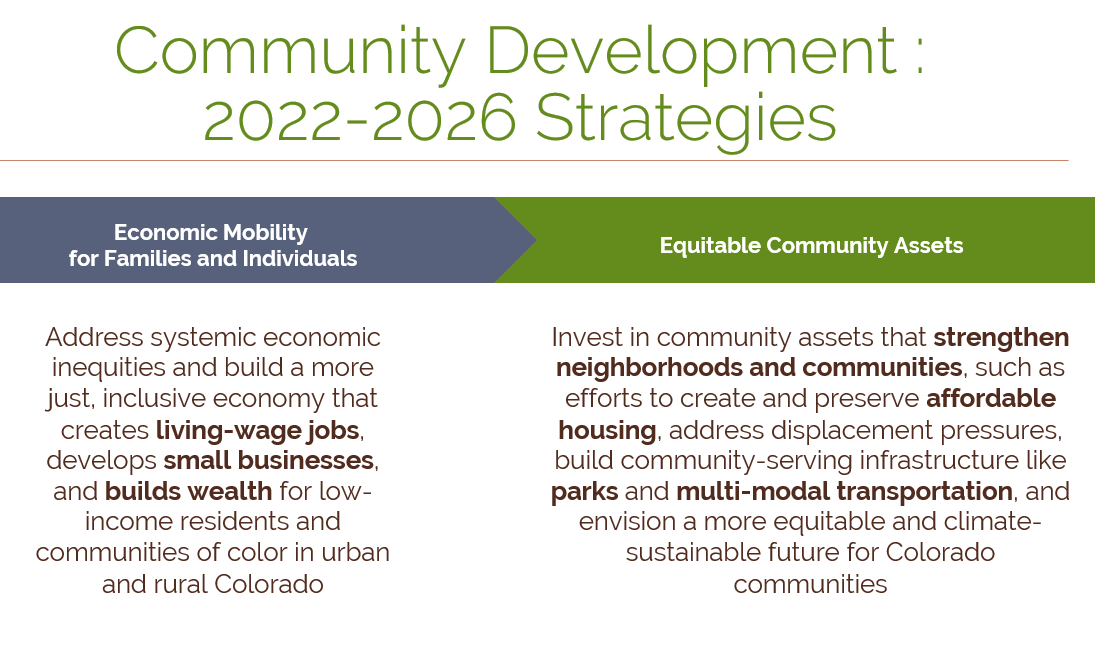
The Gates Family Foundation’s Community Development program works to expand economic opportunities and strengthen the community assets that help Colorado residents thrive. In 2025, our grantmaking focused on two strategic priorities:
- Economic Mobility, which supports pathways to quality jobs, entrepreneurship, and financial stability; and
- Equitable Community Assets, which advances affordable housing, food access, community‑serving real estate, and neighborhood well‑
Together, these priorities reflect our belief that economic mobility is shaped not only by individual opportunity, but also by the strength of the community’s people call home.
This year, we were privileged to work alongside partners whose resilience, creativity, and deep connection to community guided our efforts. Their work unfolded during a period of significant external volatility, including rising construction costs, federal policy shifts, and statewide budget constraints.
Over the year, the Foundation awarded funding supporting organizations that are building more equitable systems and expanding opportunities across the state. In 2025, our team also hired and onboarded new Senior Program Officer, Helen Katich, and deepened relationships with partners.
In 2025, the Community Development program awarded 26 grants totaling $1.23 million.
Community Development Context: 2025
Colorado’s community development landscape continued to reflect both persistent challenges and emerging opportunities in 2025.
Housing affordability remains one of the most pressing issues facing the state. Tariffs on lumber, steel, and gypsum continued to drive construction costs, and many affordable housing developments struggled to complete their capital stacks. Proposition 123, now in its second year of implementation, funded more than 8,000 units statewide; however, many projects still faced financing gaps averaging approximately 15 percent. At the same time, state and local governments navigated new housing laws aimed at reducing barriers to increasing housing supply, with a particular focus on affordable options for low‑ to middle‑income Coloradans.
The year also included a prolonged federal government shutdown, which threatened SNAP benefits for more than 600,000 Coloradans and disrupted staffing at the Community Development Financial Institutions (CDFI) Fund. Reductions and uncertainty across federal programs, including Medicaid and community development funding, created instability for families and organizations providing essential services. These disruptions were felt most acutely by partners working in food access, small business support, and community‑serving real estate. Workforce development systems continued to evolve as AI adoption accelerated across industries, reshaping entry‑level hiring and requiring training providers to adapt quickly. New statewide dashboards revealed wide variation in workforce program outcomes, underscoring the importance of data‑driven investment and highlighting organizations, such as ActivateWork, that consistently deliver strong earnings outcomes for participants. At the same time, the rural entrepreneurship ecosystem continued to grow and sharpen through technical assistance, and partnerships focused on expanding access to capital. Rural communities developed locally driven solutions to challenges related to housing, transit, and workforce development, reinforcing the importance of sustained, relationship‑based engagement.
Community‑Centered Investments in Housing, Food, and Place
In 2025, the Community Development program supported a wide range of partners advancing economic mobility and strengthening community assets across Colorado. Investments in Economic Mobility supported organizations working to expand workforce pathways, strengthen small business ecosystems, and build community capacity.
Partners such as Latino Leadership Institute, Mission Driven Finance, Small Capital, Community Builders, Startup Colorado, BEN Colorado, and ActivateWork played critical roles in helping Coloradans access meaningful work, build businesses, and pursue economic stability. Their efforts spanned urban and rural regions alike, reflecting the diverse needs and opportunities across the state. Investments in Equitable Community Assets advanced affordable housing, food access, community planning, and land stewardship. Partners including CAST, Enterprise Community Partners, Commún, Western Colorado Alliance, Nourish Colorado, the Ute Mountain Ute Tribe, and Hugo Housing worked to preserve and expand community‑serving spaces, strengthen local food systems, and support neighborhood‑driven development.
Beyond grantmaking, staff contributed to several strategic initiatives. The Foundation supported research into a Proposition 123 “side‑car fund” to complement public investments, participated in the development of a statewide one‑stop funding portal to streamline housing incentives, and convened food access organizations to prepare for upcoming SNAP changes. Staff also responded to time‑sensitive opportunities, including supporting a community benefits agreement for a new women’s soccer stadium and advancing a neighborhood needs assessments in Globeville‑Elyria‑Swansea. Across all quarters, the program’s work aligned closely with its strategic goals and was strengthened by the trust and collaboration of partners across the state.
Looking Ahead
The year offered important lessons about the resilience and ingenuity of Colorado’s community development ecosystem. The Foundation’s partners demonstrated adaptability in the face of policy volatility, economic uncertainty, and rising community needs. Their work reinforced the importance of flexible philanthropic capital, especially housing projects facing unpredictable costs and organizations navigating shifting federal and state landscapes. The year also underscored the value of data transparency in workforce development, the need for innovative financing mechanisms in affordable housing, and the importance of sustained engagement with rural and tribal communities.
As we look ahead, the Foundation is committed to deepening its focus on economic mobility, strengthening affordable housing finance, and expanding support for rural economic ecosystems. The Foundation is currently evaluating the impact of our work under the strategic plan completed in 2021 and using this assessment to update our strategies and approaches for the 2026–2028 period. Most importantly, we remain committed to working alongside partners whose strengths—creativity, persistence, and deep community connection—make progress possible.
Our Work in Action
Howdy Partners:
Howdy Partners is purpose‑built around a clear but often overlooked reality: while roughly 20 percent of Colorado’s population lives in rural communities, less than 1 percent of institutional venture capital reaches those places. The organization pairs institutional‑grade capital with deep, place‑based relationships to help close this gap and strengthen rural entrepreneurship.
“Rural communities are not innovation deserts—they are opportunity dense, capital light, and underestimated.”
— Marc Nager, Managing Partner, Howdy Partners
Howdy Partners combines local trust networks built over more than 15 years, institutional investing discipline, and narrative amplification to elevate rural founders as drivers of statewide innovation. Through partnerships with organizations such as Startup Colorado and locally rooted accelerators and lenders, Howdy Partners helps generate deal flow, strengthen founder readiness, and connect rural companies to capital markets that have historically overlooked them.
In 2025, the contraction of later‑stage venture capital disproportionately affected rural founders. Howdy Partners responded by making follow‑on investments focused on paths to profitability, expanding co‑investment syndication across regional funds, and convening partners to reframe rural Colorado as essential to the state’s innovation economy. The firm also adapted its approach as AI reshaped entrepreneurship, focusing more on founders and leadership while using AI to support business modeling and operational planning.
During the year, Howdy Partners hosted its annual Founder Summit for more than 30 portfolio companies, supported companies that hired over 60 people in Colorado, and helped nearly every company seeking outside capital raise it successfully. Beyond financing, founders reported increased access to customers, follow‑on investors, and strategic partnerships—often for the first time.
Howdy Partner’s impact is rooted in collaboration with local partners, economic development teams, community banks, and universities. As this work demonstrates, capital alone does not build rural ecosystems—trusted relationships, coordination, and disciplined execution do.
Startup Colorado:
“Gates Family Foundation’s partnership helps us do more than run programs—it helps us build durable infrastructure for rural entrepreneurs. When communities have a trusted pathway to training, peers, and capital, founders can move from idea to action faster, and that momentum strengthens the whole local economy.”
— Brittany Romano, Executive Director, Startup Colorado
Startup Colorado’s strength is its ability to turn “community” into real economic infrastructure. The organization operates as connective tissue across rural regions, linking founders to practical support, peers, mentors, and capital, while helping local partners align around shared, repeatable pathways for entrepreneurship. By working statewide and locally at the same time, Startup Colorado brings high‑quality programming into rural communities without overriding local leadership—creating a coordinated pipeline from ideas to businesses to strategic, sustainable growth.
In 2025, a tighter capital environment and shrinking resources—including funding, personnel, and programs—threatened to slow rural founders and the communities supporting them. Startup Colorado responded by systematizing supports so founders did not lose traction and communities could deploy ready‑made programs without needing to scale new investments into their ecosystems.
The organization tightened the pathway from ideation through growth by refining its Founder Coopetition Pre‑Accelerator and Accelerator programs, along with its Rural Operating System—a replicable, integrated system that moves a rural region from early ideation to capital connection. This work strengthened regional coordination and advanced durable capital infrastructure, alongside the early design of a rural angel investor network. Startup Colorado also collaborated with capital‑aligned partners, including Howdy Partners, to better connect rural momentum to broader market networks. Rural entrepreneurs—particularly early‑ and growth‑stage founders building outside metro networks—benefited most, along with local ecosystem partners who gained clearer pathways to refer and support founders.
2025 highlights include:
- Startup Colorado supported nearly 3,000 founders across 30 rural counties and 32 industries, bringing resources directly into communities, with staff traveling more than 17,000 miles statewide.
- Founders from Startup Colorado programs secured more than $1.5 million in follow‑on capital, accessed nearly $100,000 in direct capital through grants, Kiva loans, and in‑kind services, received more than $35,000 in scholarships awarded to 19 founders, and supported 16 founders to pitch live, resulting in $30,000 in cash awards and more than $20,000 in in‑kind prizes.
- Collectively, these founders created 65 jobs, with many reporting that they were able to move full‑time into their ventures. In addition, the annual Startup Colorado‑led West Slope Startup Week drew more than 500 attendees from 78 cities and generated an estimated $571,164 in local economic impact.

Helen Katich, Senior Program Officer, Community Development




 Finally, also in 2023 a total of $410,956 previously committed by Gates to the

 A total of $1,110,956 committed to the
 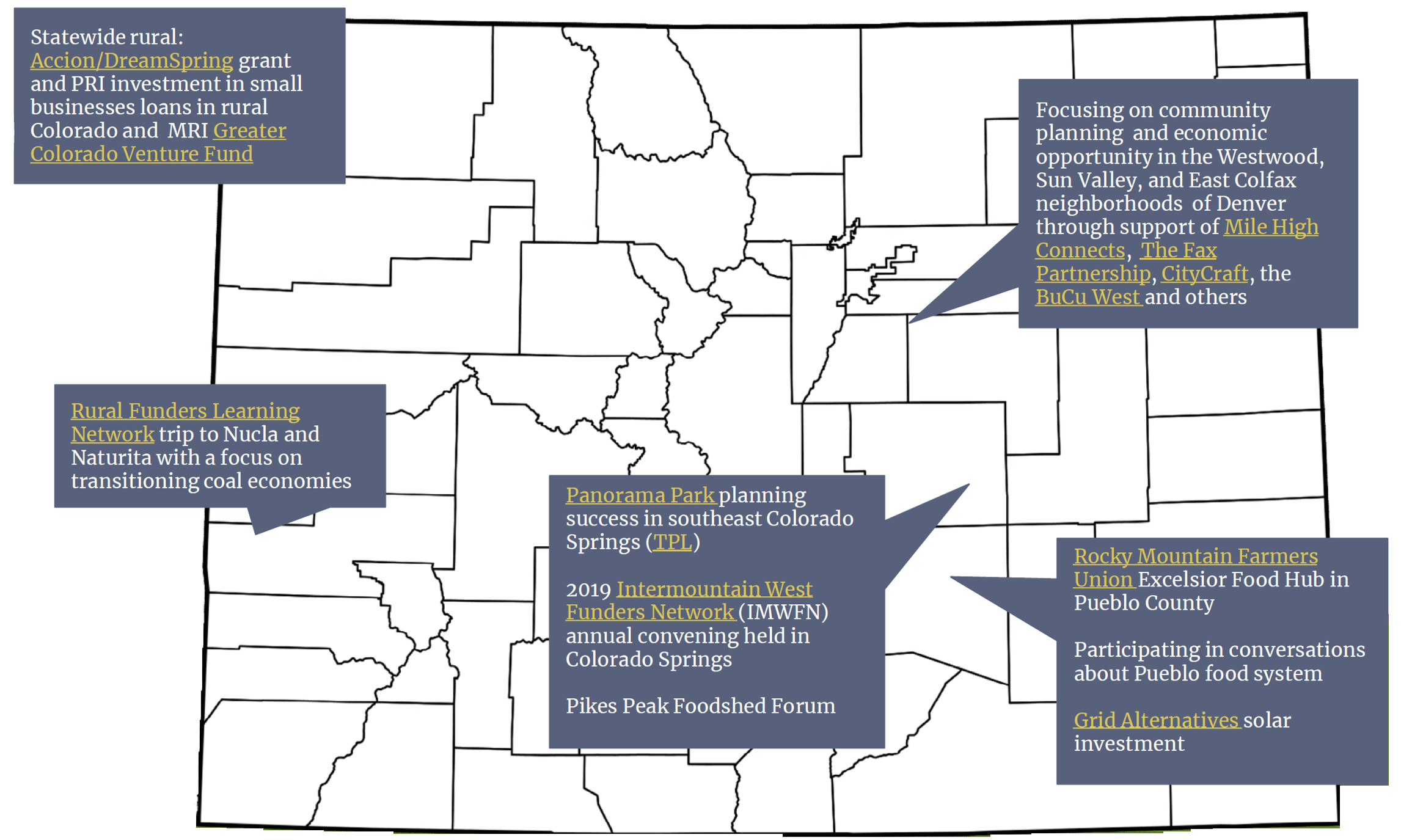 In 2019, the Community Development program committed $932,500 in strategic grants to 13 organizations and $465,000 in responsive capital grants to 12 organizations. New impact investments supporting vibrant communities in 2019 included a $500,000 MRI to
 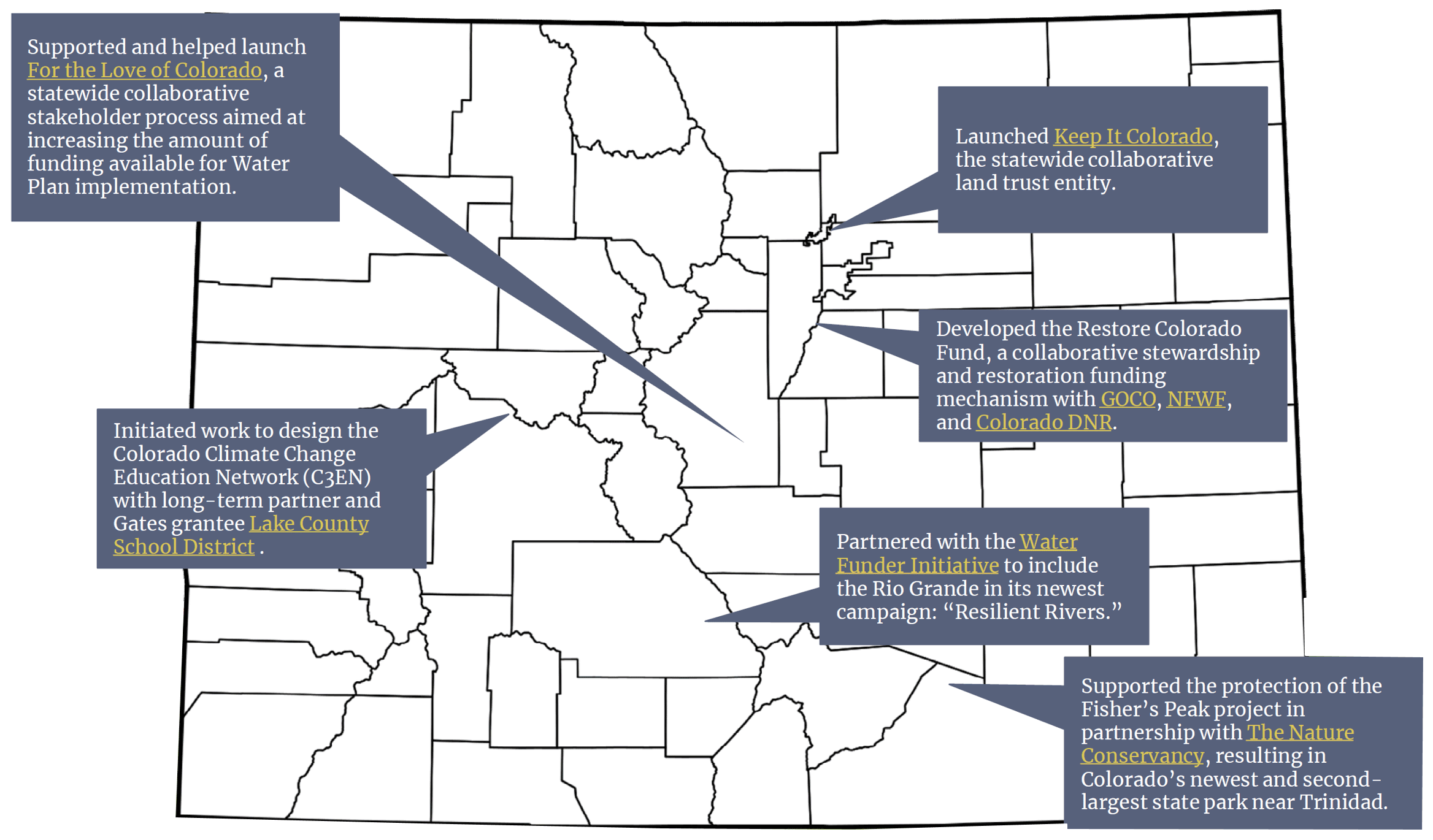 Our Focus Landscapes initiative, a key element of our Natural Resources program, underwent a comprehensive review, revision, and re-launch in 2019. This initiative was launched in 2011 to help Colorado achieve landscape-scale conservation through the protection of private lands in specific geographies. A great deal of progress was made in North Park, southeast Colorado, and the San Luis Valley, resulting in more than 200,000 acres of farm and ranch lands conserved, along with their associated ecological values. The strategic review process was done in close partnership with the land trust organizations representing those geographies, providing lessons-learned and an exploration of emerging opportunities. The revised Focus Landscapes initiative will first focus on two geographies: